Principles of Mandela's Leadership
Nelson Mandela, a name synonymous with courage andresilience, epitomises transformational leadership, embodying principles that resonate far beyond the confines of his time in South-Africa. His legacy teaches us that true leadership transcends authority; it’s about empathy, integrity, and vision—qualities fundamental in inspiring others to rise above adversity and worktowards a common purpose.
This subchapter delves into the core principles that defined Mandela’s leadership style, drawing from the profound lessons learned during his remarkable journey.
Mandela's leadership was firmly rooted in the principle of resilience. His life itself is a testament to the strength of the human spirit in the face of overwhelming challenges.
Imprisoned for 27 years, Mandela spent much of his life confined to a small cell. But rather than yielding to despair, he emerged with an unyielding resolve, transforming his suffering into a source of strength. This resilience was not merely a personal trait but a strategic asset in his.
He understood that the struggle for freedom was not just a political battle but a deeply emotional and psychological one. In reflecting on his resilience, we find the powerful story o fhow Mandela and his comrades turned their imprisonment on Robben Island into an opportunity for learning and growth.
Robben Island is sometimes referred to as “University.” While behind bars, they organised classes to educate fellow inmates on history and politics. This conscious effort to cultivate knowledge not only helped them cope with incarceration but also instilled a sense of hope and purpose.
Mandela famously stated, "It always seems impossible until it is done".
His life invites us to consider our own challenges: How do we cultivate resilience in our lives, work, and relationships? Take a pause and reflect on this question. I suggest you jot down your answers.
Integrity, another cornerstone of Mandela’s leadership, was apparent in the way he maintained his ethical compass amidst adversity. Throughout his life, Mandela exhibited unwavering honesty and humility; that he wanted to be known as an ordinary human being.
He sought to understand the fears and aspirations of his adversaries and was willing to extend an olive branch in the name of unity. This principle of integrity resonates in our contemporary world—how often do we see leaders prioritise their own interests over those of their constituents? Mandela’s example teaches us that true leadership requires us to be principled stakeholders in our communities, regardless of the challenges we face.
Vision is perhaps the most potent of Mandela’s leadership principles, serving as the guiding star that motivated his every action. Mandela's visionary perspective was especially evident during the tumultuous period leading up to the end of apartheid. He possessed an understanding that a nation could only thrive when its people were united, regardless of race or background. This vision of a free and equal South Africa inspired millions and transformed the course of history.
Mandela often spoke about his dream of a rainbow nation, an inclusive society where diversity was celebrated. His ability to articulate this vision captivated hearts and minds; it brought together individuals across political and social spectrums. As leaders in our own lives—whether in business, community, or family—we must ask ourselves: What is our vision? Are we able to communicate it passionately to inspire others?
Mandela’s leadership style teaches us important lessons, effective communication is rooted in understanding and empathy.
This is especially relevant today, where polarised environments can be seen in geopolitics, workplaces, and beyond. By adopting a perspective that seeks to understand differing viewpoints, we can open doors to collaboration, innovation, and fruitful dialogue.
There is another lesson about Mandela’s leadership; that leadership stands as a powerful reminder that authority does not solely define a leader. True leaders inspire others, creating environments where individuals feel empowered to contribute. Mandela was a master of this art. He did not shy away from acknowledging his team members' contributions; instead, he highlighted their strengths and encouraged input.
This collaborative spirit enabled diverse voices to be heard and respected—a critical factor in fostering inclusivity and equal representation. To illuminate how Mandela’s principles can be applied in our personal, business and professional contexts, consider a workplace scenario where team dynamics are strained.
A manager inspired by Mandela would first approach the situation with resilience by addressing underlying issues rather than avoiding them. This involves honestly assessing the challenges, creating a safe space for dialogue, and facilitating open conversations about team members' perspectives.
As the discussions unfold, integrity becomes vital. The manager must ensure transparency in their communication, fostering trust within the team. By embodying integrity, the manager sets an example, encouraging others to be honest about their challenges and aspirations. In these moments, the vision must be reinforced—connecting daily tasks to a larger purpose, whether it be enhancing customer experiences, driving innovation, or fostering a more inclusive work environment.
Moreover, Mandela’s principle of leadership invites us to empower others. Just as he elevated different voices within the anti-apartheid movement, leaders today should strive to recognise and amplify the talents of their team members. This can be achieved through mentorship initiatives, team-building exercises, and inclusive decision-making processes.
By empowering individuals, we create environments where people feel valued, fostering a culture of innovation and collaboration.
At the heart of Mandela's legacy lies the recognition that leadership is not a position of power but an opportunity to serve others. Whether through community engagement, fostering dialogues that challenge the status quo, or inspiring collective action for social change, embodying Mandela’s principles encourages us to lead compassionately and intentionally.
In reflecting on the lessons we can learn from Mandela's life, we might ask ourselves: How can we cultivate resilience in our own leadership? When faced with adversity, do we allow setbacks to define us, or do we see them as opportunities to grow?
Equally, how can we elevate integrity, ensuring that our actions align with our values? Finally, how can we articulate a compelling vision that resonates not just within ourselves but within our communities, inspiring us all to strive for a better life?
As we contemplate these questions, we're prompted to consider practical strategies for embodying Mandela’s principles in our lives. Cultivating resilience involves adopting a growth mindset, one that embraces challenges as opportunities for personal development.
When confronted with obstacles, practice self-reflection: What lessons can be derived from adversity? Engaging in mindfulness or stress management techniques can help strengthen this resilience, allowing us to cope with both personal and professional challenges. Embracing integrity means regularly evaluating our values and ensuring our actions align with them. This can be practiced through creating a personal code of ethics—an outline of the values that resonate with us and how we intend to uphold them.
Accountability to ourselves and others strengthens our commitment to integrity. Engage in conversations that inspire honesty and vulnerability, allowing you to clarify your commitments to ethical leadership.
Lastly, cultivating vision requires clarity of purpose. Each one of us can benefit from formalising our visions.
Take time to articulate your aspirations; write them down and revisit them regularly. An actionable vision serves as a roadmap, guiding decision-making processes in leading teams, projects, or initiatives. Consider collaborating with others to co-create a vision that promotes inclusivity and collective effort.
In summary, Nelson Mandela's leadership principles—resilience, integrity, and vision—provide us with profound insights applicable in varied contexts.
By embracing these qualities, we honour Mandela’s legacy while inspiring our own growth as leaders. Acting with resilience empowers us to navigate challenges with grace; living with integrity fosters trust; and holding a strong vision propels us towards meaningful change. True leadership involves not just guiding others but genuinely empowering them, creating a ripple of influence that extends beyond individual success to foster collective well-being.
Mandela's life serves as a powerful reminder that each of us has the potential to lead, inspire, and uplift one another. As we integrate these principles into our own lives, we contribute to a legacy of leadership that enriches our communities and shapes a brighter future for generations to come.
Let us stand firm in our commitment to embody these lessons, nurturing resilience, integrity, and vision as we strive for freedom—both personally and collectively.
Every action taken with intent, every challenge embraced with courage, and every vision communicated with passion brings us closer to the world we aspire to create. In doing so, we not only honour the indelible spirit of Nelson Mandela but also ignite the potential within ourselves to effect meaningful change in our spheres of influence.
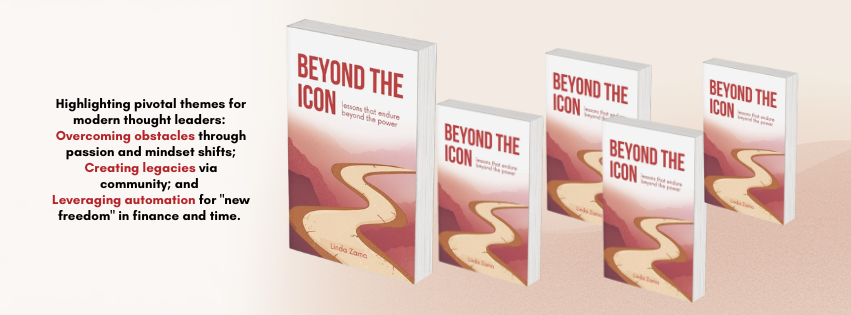
Chapter 2. Lessons from a Leader from Beyond the Icon by Linda Zama
Buy Now!